
Take two or three photographs in which a single point is placed in different parts of the frame. (A ‘point’ should be small in relationship to the frame; if it’s too large it becomes a shape.)
How can you evaluate the pictures? How do you know whether you’ve got it right or not? Is there a right place and a wrong place for the point? For the sake of argument, let’s say that the right place shouldn’t be too obvious and that the point should be clear and easy to see. As there’s now a ‘logic’ to it, you can evaluate your composition according to the logic of the point.
As you look at the pictures you might find that you’re also evaluating the position of the point by its relationship to the frame.
Take a number of images in which a point is placed in relationship to the frame.
Can you find any place where the point is not in relationship to the frame? If it’s in relationship to the frame you can place a point in any part of the picture and the picture is balanced.
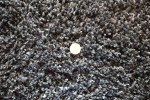
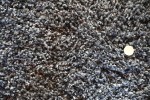
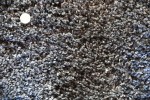
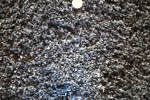
This exercise was more interesting than I anticipated, placing a single small point in various parts of the frame significantly altered the composition of the images, when I evaluated the pictures I didn’t feel there was a right or wrong place for the point except where the point touched the frame, this in my view didn’t balance, however some images seemed more pleasing to the eye than others, also when the point is off centre nearer the frame your eyes sweep across the whole image whereas when the point is central your eyes go straight up to the point.
We have all heard of the rule of thirds, where placing the point off centre creates a more successful composition, however there will always be an occasion where the point being central could be just as effective.
As you review your photographs, observe the way your eye ‘scans’ the surface of the image. Note how:
- a point attracts attention out of proportion to its size
- the eye looks for connections between two points
- placing a point close to the edge seems to animate both the point and the frame.
Print out two or three of your point photographs and trace the route your eye takes over the surface with a pencil.
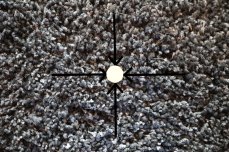
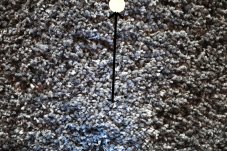
When I evaluated these two images my eyes went straight to the point, there didn’t seem to be anywhere else to go, there was nothing drawing my eyes back into the image.
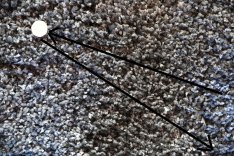
When I evaluated this image my eyes were drawn throughout the image surveying every inch of the image.
Then try the same with a selection of photographs from newspapers or magazines (or the example above). You should notice that each photograph seems to have its own tempo. Add the traced photographs to your learning log together with brief observations.
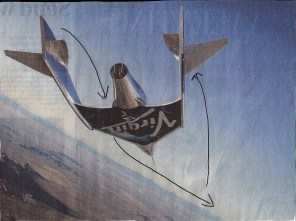
When I evaluated this image the main focal point I was drawn to initially was the top of the wing, right on the edge of the frame, then my eye focused on the connection between the aircraft and the ground and then up to the other side of the aircraft.
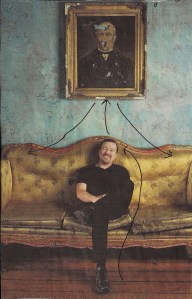
When I evaluated this image the focal point I was drawn to initially was Ricky Gervais’s face, which was central to the frame, then my eye was drawn upwards to the picture at top of the frame and then outwards each side of the frame.
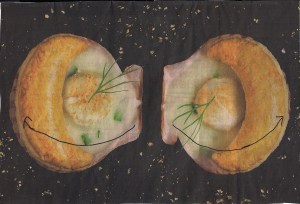
When I evaluated this image the focal point was balanced on each side of the frame connecting the points almost like mirror images.
On reflection this exercise has made me contemplate so many aspects of image composition, the point of an image can transform its appearance dramatically depending on its position within the frame.
 Jo's Photo Blog