Use your camera as a measuring device. This doesn’t refer to the distance scale on the focus ring(!). Rather, find a subject that you have an empathy with and take a sequence of shots to ‘explore the distance between you’. Add the sequence to your learning log, indicating which is your ‘select’ – your best shot. When you review the set to decide upon a ‘select’, don’t evaluate the shots just according to the idea you had when you took the photographs; instead evaluate it by what you discover within the frame (you’ve already done this in Exercise 1.4). In other words, be open to the unexpected. In conversation with the author, the photographer Alexia Clorinda expressed this idea in the following way:
Look critically at the work you did by including what you didn’t mean to do. Include the mistake, or your unconscious, or whatever you want to call it, and analyse it not from the point of view of your intention, but because it is there.
These images were taken using a Canon EOS 5D mark IV with a 24mm-70mm telephoto lens in manual mode.
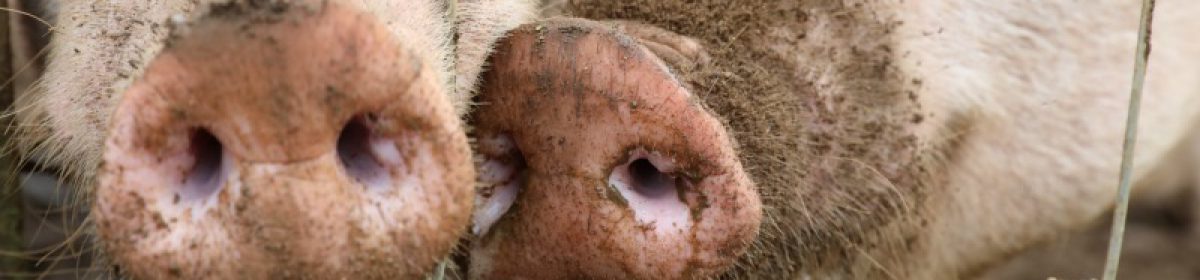
The subject I have empathy with is animals, any living animals. So I decided that I would take a series of photographs starting with my cat, to horses then pigs.
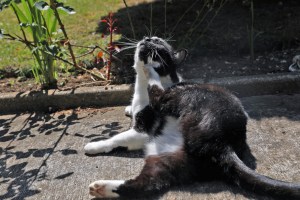
The first picture is my cat having a scratch, although the cat looks fine the background is not so good, there is a kerb and shadows within the frame.
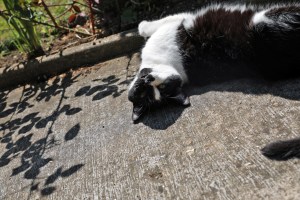
The second picture of the cat looking upside down, the image is at an angle and again the kerb and shadows spoil it.
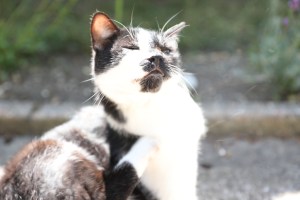
The third picture I like, the image is at the correct angle, there is a shallow depth of field making the kerb less visible, and the sunlight is just right, reflecting off of his white fur.
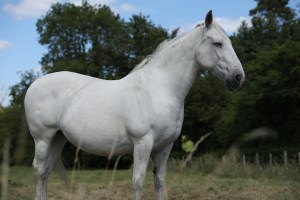
The first image of the horse looked very grey, so I moved the exposure compensation up one stop.
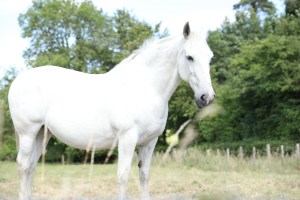
The second image was better, the horses coat was white, but I had him too far to the left of the frame.
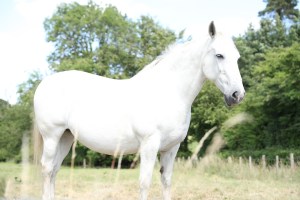
The third image was the look I was trying to achieve, the horse is white and filling the frame nicely, there are blades of grass at the front blurred very softly.
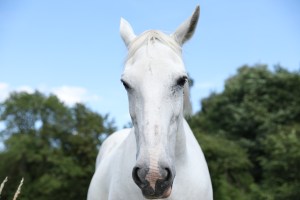
The fourth image has a shallow depth of field, but having the horses head central to the frame doesn’t work too well, it would have been better if the head had been at an angle and I had taken the image in portrait rather than landscape.
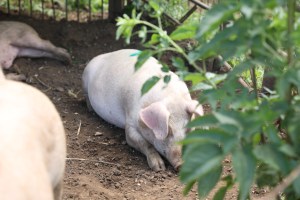
In this first image of a pig I have managed to include most of the things I’ve learnt not to do, the leaves are covering the pigs head, there are legs and the rear end of another pig in the background.
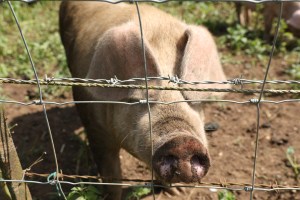
The second image works well, the snout poking through the wire fencing, the pig filling the frame nicely and the pigs body at a slight angle.
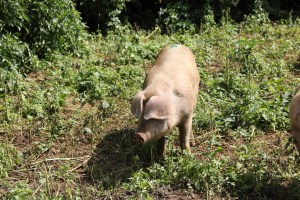
The final image would have been better if I had been closer to the pig, it’s interesting that its glancing sideways.
My ‘select’ image is the pig with his nose through the wire fencing, when I took this picture I didn’t expect it to be my select, but with the barbed wire and the snout poking through, overall this is the image I prefer.
 Jo's Photo Blog