Select an image by any photographer of your choice and take a photograph in response to it. You can respond in any way you like to the whole image or to just a part of it, but you must make explicit in your notes what it is that you’re responding to. Is it a stylistic device such as John Davies’ high viewpoint, or Chris Steele Perkins’ juxtapositions? Is it the location, or the subject? Is it an idea, such as the decisive moment? Add the original photograph together with your response to your learning log. Which of the three types of information discussed by Barrett provides the context in this case? Take your time over writing your response because you’ll submit the relevant part of your learning log as part of Assignment Five.
After reading Terry Barrett’s article Photographs and Contexts, it really opened my eyes to how the context of an image can be manipulated, Robert Doisneau’s image of a charming couple drinking wine in a café in Paris has had the context of the image altered drastically on more than one occasion, just by the environment it was displayed in and the text surrounding it, even though the image itself was never modified.
In Terry Barrett’s article he writes that three sources of information are available, they are the information evident within the picture, information surrounding the picture in its presentation and information about the pictures making, this is also known as internal context, external context and original context.
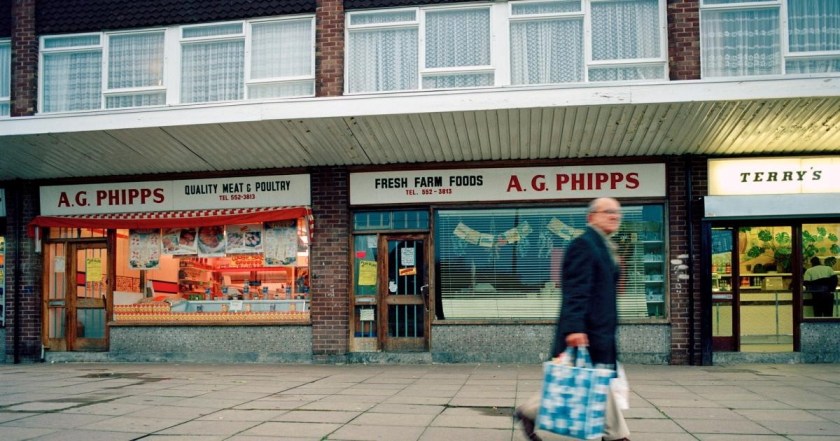
The image I have selected for this exercise is ‘Shopping’ by Robert Clayton, one of his ‘Lion Farm Estate’ series taken in the 1990’s.
This image is of a typical sink estate shopping area, with social housing flats built above the shops. ‘White’ net curtains in all different styles cover the windows. The typical convenience stores usually consisted of a Butchers, a Fruit and Vegetable shop and a Fish and Chip shop. These were nearly always a family concern and named accordingly.
The stone paving slabs are now all uneven, faded, looking tired and worn out.
The man in the image walking past with his bags of shopping, taken with a slow shutter speed makes him looks as if he’s rushing to get past all this dying trade.
The image is also slightly tapered at one end, like it’s being sucked away by a giant hoover.
Robert Clayton wanted to highlight the spirit and sense of belonging that existed on this estate knowing it was due for demolition.
The presentational environment and context of this image tells the story superbly, Robert Clayton has captured the bleakness of this doomed estate, the sadness and emptiness of leaving what had once been a home environment for many families for many years.
These estates were built for social housing needs all over the country, but with the Thatcher government starting a ‘Right to Buy Scheme’, allowing properties to be purchased with huge discounts for political gain, the housing stock became extremely diminished. Redevelopment promises were made and have been made even today, but still not materialising.
He wanted to emphasise the whole political situation that encompassed social housing needs.
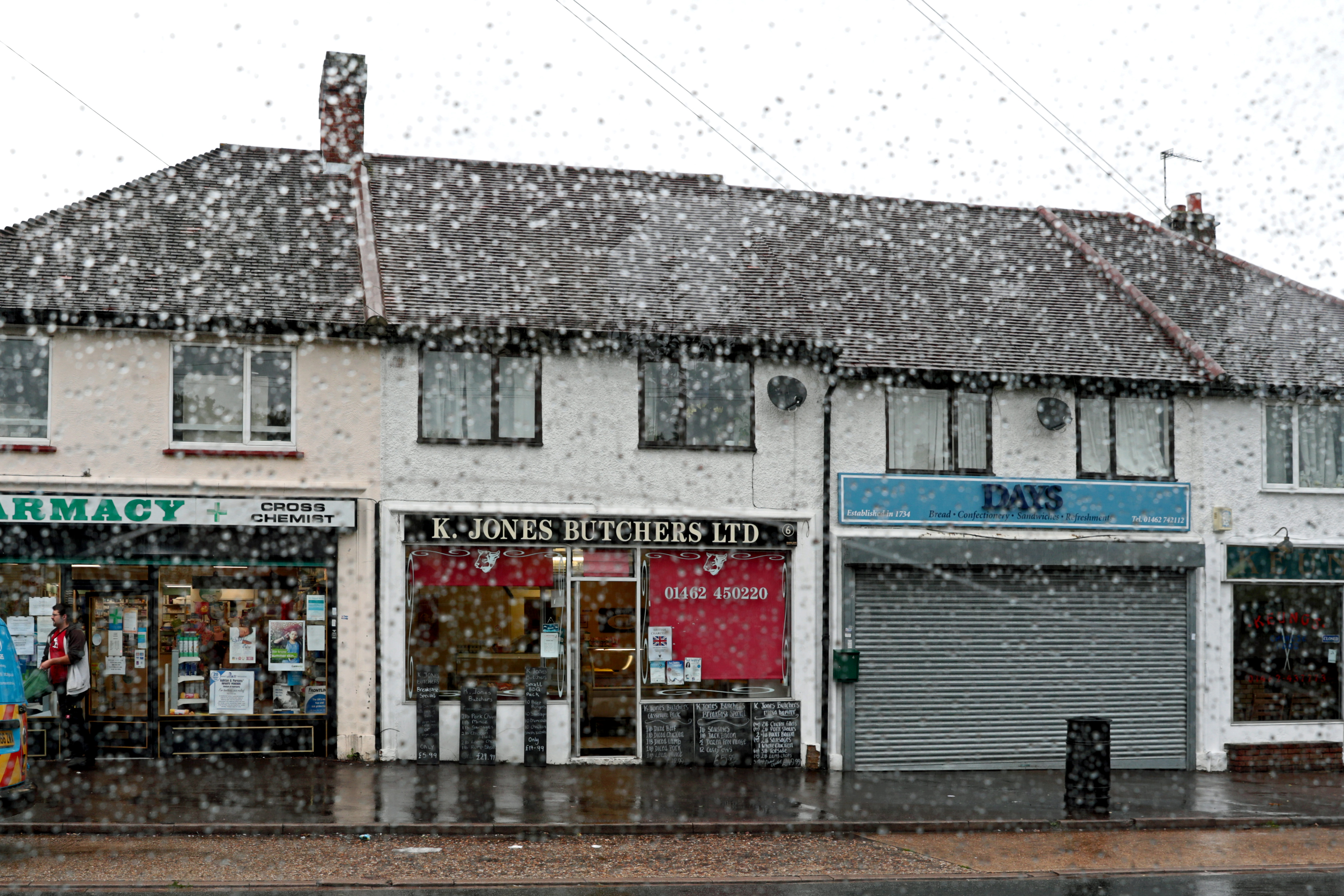
I have taken this image in response to Robert Claytons photograph above, the presentational environment and context of this image show this small row of shops on a typical sink estate with social housing above, the family run businesses are desperately struggling to make ends, with customers few and far between, the bad weather really emphasises the despondency felt, it’s as if the raindrops are tears of sadness.
This estate has been promised refurbishment of its shopping area for many years, with nothing ever materialising, the whole estate is rapidly becoming run down and dilapidated. This estate was built for social housing needs, just like Robert Claytons image, (although this estate isn’t due to be demolished) the whole area is treated as if it’s a mild irritation with all the issues frequently being brushed under the carpet.
 Jo's Photo Blog