
Read the reviews by Campany and Colberg and, if you haven’t already done so, use them to begin the contextual section of your learning log. Try to pick out the key points made by each writer. Write about 300 words.
Reviews by David Campany and Joerg Colberg
Thomas Ruff: Aesthetic of the Pixel
David Campanys review of Thomas Ruffs work poses a lot of questions; He writes “His work seems cold and dispassionate, willful, searching and perverse but at times surprisingly beautiful” Campany D (2008). Since the 1920s and the rise of the illustrated magazines and cinema, Dada, Surrealism and Cubism became an influential part of the visual Art world, all images these days are digitalised and made up of electronic information known as pixels, in the 1930s 40s and 50s when film images were developed with a grainy resolution this was believed to be a sign of authenticity, whereas Thomas Ruffs images were blown up far beyond their correct resolution to create a distorted and blurred image. David Campany realises that the Thomas Ruffs JPEGS is pushing the boundaries of this digital era, we know that all the images in Thomas Ruffs JPEGS are digital, made up of pixels which are grid-like, and looked upon as machinic and repetitive unlike the graininess of film, so we do not think of authenticity. But David Campany states “there is evidence that our response to the pixel is changing and we can measure something of that change through Thomas Ruffs JPEGS” Campany D (2008).
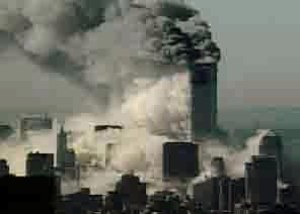
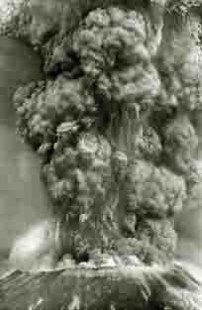
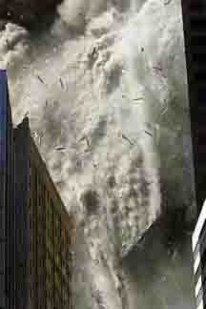
Joerg Colberg viewed Thomas Ruffs works as creative and inventive, although he posed the question as to whether or not this is classed as photography or visual art. Thomas Ruff happened to be in New York when the attack on the world trade centre took place in 9/11, he took many photographs of his own only to discover that all the negatives were blank when he had them developed, this led to him creating his own collection by computerised manipulation of archived photographs. The book Thomas Ruffs JPEGS according to Joerg Colberg “work amazingly well in book form” Colberg J (2009),he preferred the book to the actual prints on exhibit in the Zwirner gallery, as he thought that “the amount of detail in the images was actually not large enough to justify the sizes shown in the gallery” Colberg J (2009). Joerg Colberg admires Thomas Ruffs work although he doesn’t see where it can take him and feels he also seems to rely a bit too much on the technique itself, trying to convince him that in reality “JPEGS” is more.
“Either way, Jpegs is a stunningly beautiful book. Seeing the images in the book has made me re-appreciate the sheer beauty of this body of work, despite the ultimate thinness of the concept behind it” Colberg J (2009) .
I believe there is a clear correlation between visual art and photography therefore Thomas Ruffs JPEGS could inspire other artists to experiment with infinite archive images, manipulating them in a multitude of digital processes.
Below is one of my own compressed jpegs, achieved by resizing and saving as ‘zero quality’.

 Jo's Photo Blog